Sarah Weeks the Mother of Robert ‘Bob’ Gibson’s Children?

In 2021 I stumbled on the Palfrey Papers that were housed in the Fondren Library at Rice University in Houston, TX. Among the many documents I found were William T Palfrey’s 1842-1859 Plantation Diary as well as letters between John Palfrey and sons William, Henry and John Gorham. I found information on my paternal 3rd great grandfathers Robert ‘Bob’ Gibson and James ‘Jim’ Morgan. Both were young children listed among the slaves sold by Relf & Chew to John Palfrey March 9, 1811. Bob was listed with his mother Aime and siblings: Joe, Tom, Ben and Fannie. James was not listed in any family group. Also listed were Sam and wife Mima and daughters Sally and Anna.

I was able to easily determine that James Morgan’s wife was Sally Riggs and that their children were George, Ambrose, Mima, Mahaley, Phoebe and Hortense ‘Fortune’ Morgan. Fortune’s death certificate listed her mother as Sally who was born in North Carolina. Additionally, Sally, Jim and children were listed on John Palfrey’s 1843 probate.

Bob or Robert Gibson was not included in John Palfrey’s 1843 probate as he and James ‘Jim’ had been swapped by John and William Palfrey in 1835. So, there was no document laying out Bob’s family. I found death certificates for Fanny Marshall and Elsie Morgan that listed their father as Robert Gibson. Neither death certificate provided a name for their mother. My family descended through Elsie Gibson, and I found many DNA matches from Elsie’s descendants and also from Fanny Gibson & William Marshall. So, I now knew Robert had at least 2 children: Fanny and Elsie.

When I read William T Palfrey’s diary I saw references to Nancy, daughter of Bob and also of Caroline, wife of Bob giving birth to Letty in 1854 and Lewis in 1864. hen knew that Bob had another daughter Nancy. I’d already found Bob with Caroline, Letty and Lewis on the 1870 census. I found additional information in the plantation diary of another daughter of Bob’s–Charity. Palfrey wrote of Bob transporting a Charity and her daughter Sidney from Franklin to Cypremort in the midst of the Civil War taking place all around them. In 2026, I found a DNA descendant of Charity in Ancestry to further substantiate that Charity was Bob’s daughter. But I still had no name for the mother of Fanny, Elsie and now Charity. Charity’s daughter Ellen Green Betts was interviewed by the WPA in the Texas Slave Narratives. She told of her life in St Mary Parish and mentioned several names https://www.ancestry.com/imageviewer/collections/1944/images/BYU325-01462?pId=6819.

On a visit in 2024 to the St Mary Parish courthouse, I found an April 27, 1838 deed, Folio 178, Entry 4400. Included was a list of slaves: Bob 35, Peter 34, Anderson 36 as well as Sarah 35 and children: Dave 12, Aimy 16, Nancy 9, Kizzy 30 and Eliza 7 and Cyrus 4.

When I got back home, I went through all of the Palfrey journals and letters again and found a 5 page account book for 1832 for William Palfrey. On one page were the names of young Palfrey slaves:

  • Aimy born Oct. 3, 1821,
  • Charity born 8/2/1824,
  • David born 9/16/1826,
  • Nancy born Oct 10, 1827
  • Elisa born Nov 23, 1830
  • Anthony born Sep 6, 1831
  • Cyrus born May 11, 1833
  • Fanny no birth date listed

On the following page was a list of slaves on his plantation in 1832. That list included John, Jim, Peter, Anderson, Sarah, Roy, Amy, Charity, David, Nancy, Kizzy & her child Elisa, Sinah, Manuel, Jesse, Harriet & her child Anthony.

The names in the 1832 account book almost totally mirrored the names in the 1838 deed record. Names of interest that were missing from the 1838 deed record were the names Charity, Fanny and Sinah. And missing from the 1832 account book records was Bob. Bob was still among the slaves of William’s father John Palfrey. William and John Palfrey formally swapped the men in 1835. Sarah’s name precedes the names of Aimy, Charity, Dave and Nancy in both the 1832 account book and the 1838 deed record. Sinah’s name is listed in the 1932 account book, but the order of the names in the list suggests that she is not the mother of Bob’s children who are listed above her.

So, who was this Sarah?

I scoured William Palfrey’s 1842-1859 diary again, this time looking for references to Sarah. I found 2. Palfrey wrote that Sarah Weeks ran away for a few days and returned May 12, 1848 of her own accord. He wrote that Sarah died Dec 11, 1851 at the age of 55.

Palfrey referred to Sarah as Sarah ^ Weeks. Had she been a slave of Palfrey’s earlier partner Davids Weeks? How did she come to live on William Palfrey’s plantation? Were her mother, father or siblings also on Palfrey’s plantation or a Weeks family member plantation? Was she the mother of all of Bob’s children Aimy through Elsie?

Was she David Gibson’s mother? My mother, my sisters and several close cousins are relatively close DNA cousins to many of David Gibson’s descendants. All of David Gibson’s descendants are DNA cousins on my mother’s maternal side while all of her matches through Charity, Nancy, Fanny and Elsie are on her paternal side. How can this be?

I need to do more research to make this make sense. Until then…

Best,

Unlocking the Mystery of Joseph ‘AKA’ Young Smith’s Mother

My niece and I’d recently documented that Thomas Merimee of Nelson County, Kentucky was the father our 4th and 3rd great grandfather Joseph Smith who went by Young Smith. We are now on the quest to find Joseph’s mother. Was she the female slave between the ages of 10 and 23 who was listed on the 1830 and 1840 census in Thomas Merimee’s household? If she was Joseph’s mother, where was Joseph? The only slave listed in Thomas Merimee’s household for both the 1830 Jefferson County, KY and 1840 Nelson County, KY census was a female slave between the ages 10-23.

By 1850 Thomas Merimee had 4 slaves: a 25-year-old male; a 20-year-old female; 2 girls, ages 4 and 2; and a 2-month male child. The female slave who we theorized to have been Joseph’s mother was not seemingly among this group of slaves in Thomas’ household. Was the 25-year-old male Joseph? If so, in whose household had he been in 1840? According to Iberia Parish, Louisiana census records, Joseph Smith was born in 1835. Which means that he should have been included on the 1840 Kentucky slave schedule if not also on the 1830 schedule.

So, Joseph seemingly was not counted in Thomas Merimee’s household. Perhaps the female slave in Thomas’ home was not Joseph’s mother. Thomas Merimee and Maria Eliza Gardiner were married 1825 in Nelson County. Maria Eliza Gardiner’s family had lived since the 1700s in Maryland. Names on her family tree included: Clements, Edelin, Elder, Spaulding, Boone, Hamilton and Coomes. Could that young female slave have been a wedding gift? Who were her people? Did her relatives live in Nelson County, KY or in a neighboring county?

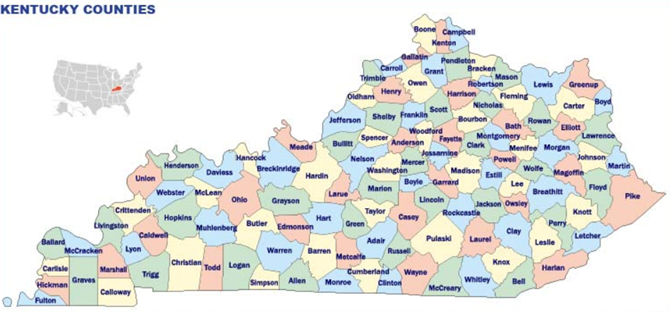
Map of Kentucky CountiesI searched in Ancestry for DNA relatives that lived in counties neighboring Nelson County. I found 6 DNA profiles, some who had family trees for people that lived in Marion County, KY. Four of those DNA 4 profiles belonged to people who were 1st and 2nd cousins to one another and included a father and daughter. These 4 profiles had shared DNA with my mother and also with 2 other direct descendants of Joseph Smith. One surname included in the family trees of 3 of the 4 DNA profiles was ‘Young’. Another surname that was included in the family trees of 3 of the 4 DNA matches was O’Daniel.
Four of the 6 DNA profiles that matched my mother and other Joseph Smith descendants have Alex O’Daniel who was born about 1838 at the top of their family tree. Three of the 4 have Robert Young, born about 1850, at the top of their family tree.

Two of the 6 Marion County, KY DNA profiles, don’t have family trees attached. Both DNA-profiled people are 2nd cousins to the previously identified 4 profiles that have O’Daniel-Young family members. I was able to make a partial family trees for both women using their profile names, obituaries and newspaper articles. The 2 women grew up in Marion County, Kentucky.

An interesting thing about the 2 DNA profiles is that they share DNA with my mother, the other Marion County, KY profiles and many more direct Joseph Smith descendants than the other 4 profiles. The 2 additionally share DNA with a key DNA match for whom we have been attempting to connect to our Smith-Phillips tree since 2015. This key profile person shares DNA with my mother and with her Merimee descendant cousins and a select group of Joseph Smith descendants. That select group of descendants have a family tree that includes Philip Eglin. Philip’s family traces back to Maryland. And although the family name in Louisiana was always written as Eglin, I think the original name may have been Edelin or Edelen instead.

And because I always look for patterns within patterns inside of patterns, I looked for Edelins that lived in Marion County 1830-1860s. I found a Leonard Edelen born about 1801 in Kentucky. He had 3 slaves in 1840 and 6 slaves in 1850. He died about 1865 in Lebanon, Marion County, KY. I found his son Leonard Edelin (sp) living in Rolling Fork, Casey County, KY in 1870. Casey County borders Marion County to the south. Listed in Leonard Edelin Jr.’s household was 50-year-old Catherine Young, sixteen-year-old Joseph Young and twenty-five-year-old Coulter W Young. In the next household was Robert Young, his wife Mary, and children: Catherine, Hannah and Alice D. Robert Young is the man at the top of 3 of the 4 matching DNA profiles mentioned above. The race of Robert and all the other Youngs on the page was listed as Black.

Is the Young family from Marion County, Kentucky related to Joseph ‘Young’ Smith mother? Three of the 6 profiles have family trees that include the surname, Young. Four profiles include the surname O’Daniel. The remaining 2 profiles do not include a family tree, but the tree that I sussed-out so far does not include either Young or O’Daniel. None of the 6 profiles seem to share DNA with Merimee profiles.

So, this group of 6 from Marion County, Kentucky is my base camp for looking for Joseph ‘Young’ Smith’s mother. These 6 profiles match many more Ancestry profiles. I will have to continue and search deeper so see if and how they connect to Jospeh ‘AKA Young’ Smith.

Best,

Finding Joseph A.K.A Young Smith’s Father

If you’ve followed my blog for a while, you may have noticed that most of my most detailed findings have been on my mother’s paternal side and include her Gibson, Morgan and Riggs ancestors. I have been able to trace them as far back as 1811 because of letters, journals and probate and other written materials by and about John Palfrey and family of Boston, Mass. and later St Martin and St Mary Parishes in Louisiana.

Similarly, much information was uncovered on 1/2 of my mother’s maternal family which includes the surnames: Guy and Jenkins and my paternal ancestors: Fournice and Shoals ancestors. These names were included in probate records of the Weeks, Meade and Weightman families.

The other 1/2 of my mother’s maternal tree were uncovered through 2 female DNA matches in Ancestry.com and Gedmatch.com: CG and Destinysmom12. These 2 DNA profiles and the family trees that were pieced together cemented our Calvert County, Maryland heritage. I ‘d been able to find my 3rd great grandmother, Charlotte Phillips’s family alive on the 1870, 1880 census still living in the vicinity of Solomons Island, Calvert County, MD.

After my success finding Charlotte through DNA profiles and matching members on family trees, I focused next on finding the family of Charlotte’s husband, Joseph ‘Young’ Smith, my 3rd great grandfather. Joseph had been born about 1835 Kentucky and as per the 1900 census data, so were his mother and father. Back in 2015 in Ancestry.com there were 2 profiles of relatively high matches (67cM and 40cM on 2 segments) whose family trees included people who lived in Kentucky. These 2-profile people were related to one another. Their family trees included the surnames: Sutton, Ray, Merimee, Gardiner, Roth, Elder, Hamilton, Higgins Howard, and Mayfield. These 2 profiles were my mother 3rd cousin or half 2nd cousin 1x removed. The two matched a third profile who was a 105cM match on 4 segments. This third profile was for a man who stated that he was adopted and so had no family tree.

So, my niece Latrice and I determined that we could maybe connect Joseph ‘Young’ Smith to these 2 Kentucky DNA-profile families by figuring out the family tree of this third profile. If we could then connect him to the other 2 profiles, we would then know how we all were connected.

I found a DNA profile for that third person also in Gedmatch.com. In Gedmatch, I was able to see his highest shared matches with my mother and his highest matches that did not match her. He had several very high matches with people whose family trees included people who lived in Overton, County, Tennessee. We next compared his high matches with each other and were able to triangulate on 1 surname, Harges sp Hargis.

So, we tracked men and women from this family to see who moved west and lived in Iowa, Nebraska, California and Arizona. We found obits, marriage records, and newspaper articles that helped in our search. Sometime in mid-2019 Latrice and I had connected the Overton County, TN branch of profile #3 to the 2 Kentucky profiles. The names that all three profiles had in common were Gardiner and Merimee.

The Gardiner family was from Charles County, Marland and this branch had moved to Nelson County, Kentucky by late 1700s or early 1800s. The Gardiner family lineage has been very well documented going back to the late 1600s and is quite extensive. Many Gardiner descendants have moved to St Landry Parish, Louisiana and lived somewhat near my Smith-Phillips family in Iberia Parish.

The Merimee family was harder to trace. The patriarch of the family was William Merimee who was reported to have been born about 1750 in France. By 1798 he was in the United States and living in Fayette County, Pennsylvania. He was reported to have married Mary Magdalene LeBrun a native of France. He moved with his family to Nelson County, Kentucky sometime after 1800.

Which of the 2 surnames Gardiner or Merimee had a connection to Joseph ‘Young’ Smith?

As the years passed between 2015 and 2019, more and more DNA profiles appeared in Ancestry.com that all included the Gardiner-Merimee surnames. As we compared each of the new profiles, we were perplexed because each of the new Gardiner-Merimee profiles seemed to match only one another, my mother and her immediate family.

We could not figure out how none of the 15 or more profiles failed to match any of the known Gardiner families in Louisiana or a Gardiner family living anywhere!!! There were so many Gardiner descendant DNA profiles that we found among the Public Member family tree section in Ancestry.com. Not one of them matched my mother. Similarly, we found several of family trees that included the surname Merimee. William Merimee had at least 2 sons; Frederick and Thomas and 1 daughter Prudence. All the DNA profiles in Ancestry had Thomas Merimee at the top of their family tree and his wife Maria Eliza Gardiner.

At the time my niece and I kept saying that either Maria Eliza is Joseph Smith’s mother or Thomas Merimee is his father. But we did add either to our family tree. We moved on to researching the connection of other members of our family.

Months and then a year or 2 years passed.

2025 was a new year and I narrowed down my list of “have to knows” from the myriads of things to just 2 things. One of those things was, “who were Joseph ‘Young’ Smith’s parents.

So, I set out to figure out who Joseph’s parents were. There were two things that had always been great curiosities about Joseph: the name with which he was documented and that he was listed as a Mulatto male on the 1870 census, but not the 1900 census. On the 1870 and 1900 census records for Iberia Parish, he was listed as Joe and then Joseph. But he was referred to ‘Young’ Smith on the 1872 purchase of land with Charlotte and on his 1878 marriage record to her. Both the deed and marriage record were legal records of a sort and he was referenced as Young and not Joseph. Why? Had his father been Joseph Smith Sr? Had Joseph originally been on a plantation or farm owned by a Smith and he was just one of the young boys living there? Had he been on a plantation owned by the Young family?

My niece built a Gardiner-Merimee tree in Ancestry. She researched the original William Merimee and discovered that he had a brother and/or a son who went by the name Lewis Marymee. A Lewis Merimee had lived in Pennsylvania in 1800 and a Lewis Marymee had married in Bullitt County, KY in 1822 and later died 1834 or 1835 in Sullivan County, IND.

I started adding to the tree the Latrice had started, focusing on Lewis Marymee’s descendants. I traced each of his 5 sons and added their families to the tree. Newspaper articles, marriage and death records helped trace the families through the decades. I traced one branch of his family to Houston, Texas by 1900 and added those names to the family tree.

Finally, I added a surname to the tree that flashed in my memory. I’d recently seen that name as a new addition to the now more than 70 DNA profiles that matched the Gardiner-Merimee group that I’d created in Ancestry. Some had family trees, some had useable profile names, other had gooblety-goop for profile names. This new DNA profile name used the surname that I’ d just added as a new name to our research tree. This profile also matched 7 profiles of the known descendants of Thomas Merimee and Mary Eliza Gardiner. This profile shared only 12cM on 1 segment with my mother. Per Ancestry, she is my mother 4th cousin or half 3rd cousin, 1x removed.

This new profile was a descendant of Lewis Marymee, who was the brother, son or grandson of William Merimee. In any case, we now knew that Joseph Smith’s connection to this large Gardiner-Merimee group was through a Merimee and not a Gardiner.

And so I called Latrice and said again what we’d both said years before, “Thomas Merimee has to be Joseph Smith’s father!”

I then wanted to know all about Thomas Merimee. All that I had known was that he was born about 1802 in Nelson County, KY, that father died about 1805 and that his mother died about 1841.

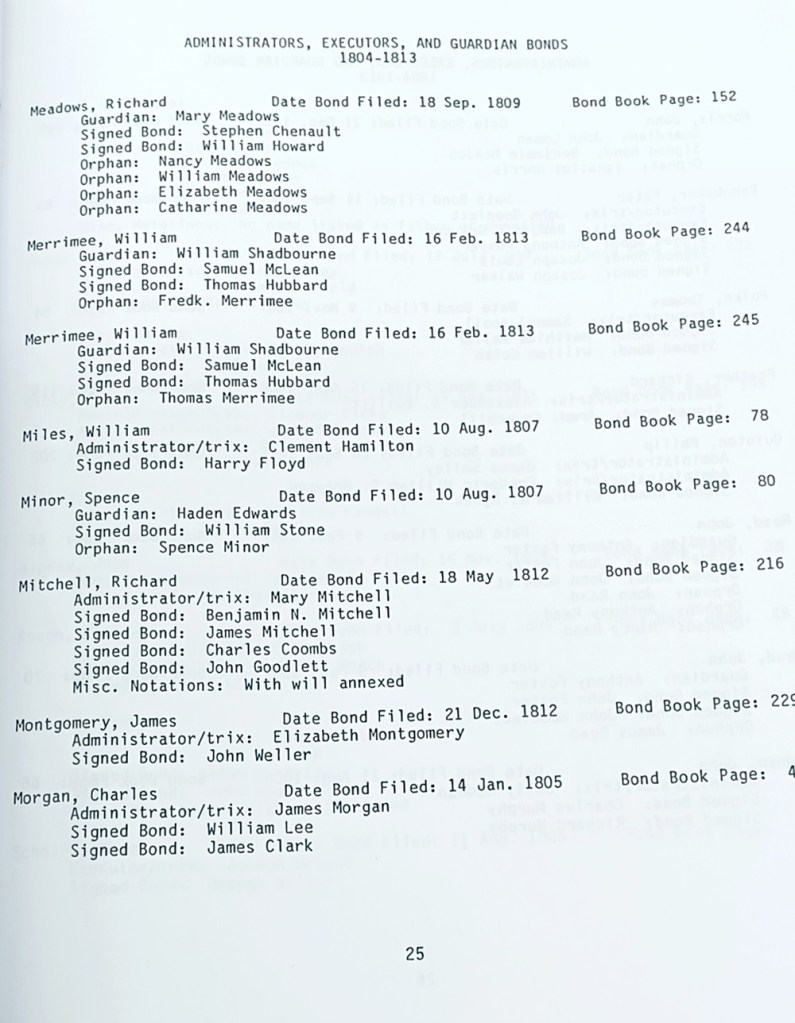
Thomas and Frederick Merimee orphans, guardian William Shadburn

Additional research uncovered a Bond Book in which Thomas and his brother Frederick were listed as orphans. In 1813, William Shadburn, the young husband of their older sister Prudence was appointed to be their guardian. I could not find much information on Thomas’ mother Mary Magdalene Lebrun. What I did find was: an 1810 Nelson County, KY census record for a household of 4 and a 1812 marriage record of her daughter Prudence to William Shadburn; and a record of Mary Magdalene ‘Prudence’ birth of 1765 and death in 1841 on a tombstone in the St. Joseph Cemetery in Bardstown, KY. The tombstone inscription included the words ‘Wife of William Merimee’.

I found Thomas Merimee living in Jefferson County, KY at the time of the 1830 census. His household included him, his wife and 2 male children under the age of 5, 1 male child over 5 and 1 female slave between the age of 10 and 23. Joseph ‘AKA’ Young Smith was born about 1835. By 1840 Thomas was again living in Nelson County, KY. His family now totaled 8 and include 1 female slave between the age of 10 and 23. If the female slave listed in 1830 and 1840 were the same person and for her to have been between 10 and 23 for both census terms suggests that the was 12 years old in 1830 and 22 years old in 1840. If she was Joseph’s mother, then she would have been 17 years old when he was born in 1835.

Thomas was listed on the 1850 and later census as a blacksmith. He most likely owned a blacksmith shop either on or near his home. The only additional information that I have found regarding Thomas is the marriage and death records of his daughters and sons and their descendants.

I am curious to know who was the 10-23 year-old female slave counted in Thomas’ household in 1830 and 1840 and what became of her. Was she Joseph Smith’s mother, his sister, an aunt or related to him at all?? I’ve been looking at probate records for Maria Eliza Gardiner’s family members to see if Thomas Merimee may have acquired this young female by way a dowry.

So, Latrice and I have figured out who was Joseph ‘Young’ Smith’s father–Thomas Merimee 1802-1878. Now to find his mother and perhaps the reason he was called “Young Smith”.

Best,

Tracing Charlotte’s Journey

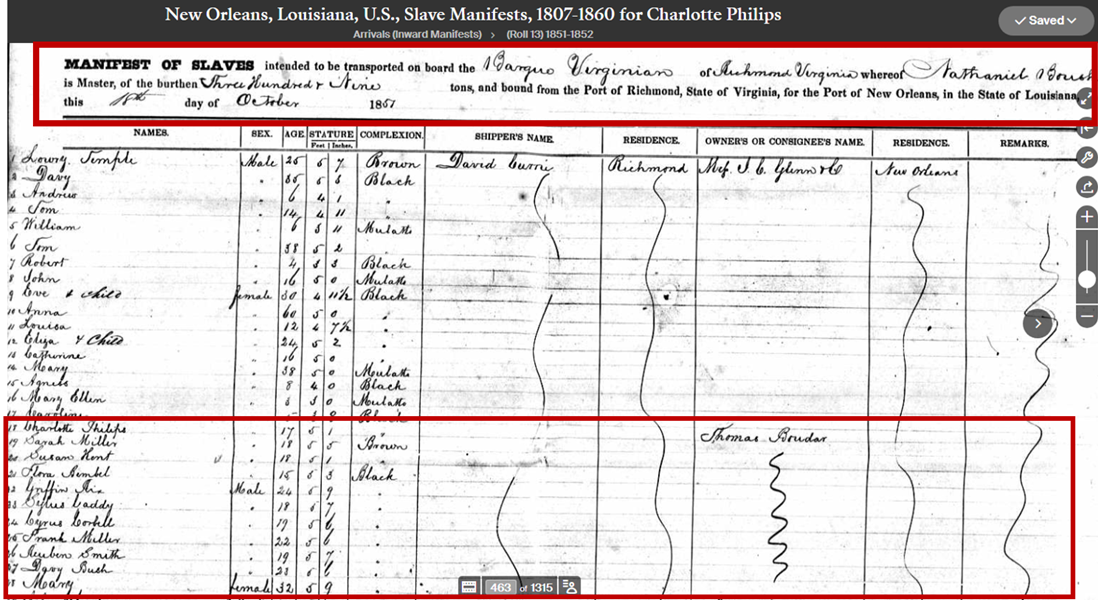
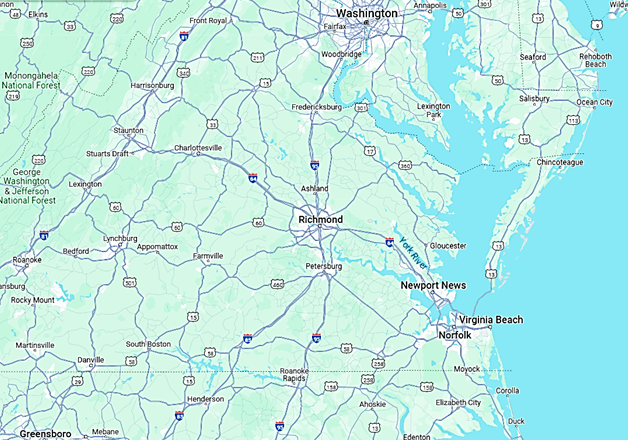
The earliest record that I’ve found of my 3rd great grandmother, Charlotte Phillips, was an Oct 18,1851 ship manifest. She is listed as a 17-year-old female whose height was 5’ 1” and whose complexion was described as black. She was among 11 slaves, 3 women and 8 men for which Thomas Boudar was recorded as the owner or co-shipper. The manifest included the names of 153 slaves being shipped out of Richmond, Virginia to New Orleans aboard the Barque Virginian under the command of Capt. Nathaniel Boush. Barque, barc or barc were sailing vessels with 3 or more masts, of which all but the one at the stern is rigged with square sails.

Oct 18, 1851 Baroque Virginian Manifest, Charlotte Phillips, Thomas BoudarThe heading on the manifest read: Manifest of slaves intended to be transported…out of burthen Three hundred and nine, and bound from the Port of Richmond, State of Virginia, for the port of New Orleans.  I first found the manifest on Ancestry.com. In 2023, I learned of a database hosted by Rice University accessible at slavevoyages.org. I found Charlotte Phillips’ name listed on a manifest. Per the slave voyages database, Charlotte did not ship out of Richmond on Oct 18, but instead on Oct 22. Additional information was that the ship arrived in New Orleans on Nov. 11, 1851. This meant that Charlotte was aboard the Barque Virginian for 19 days. Where had she been between Oct 18 and 22?
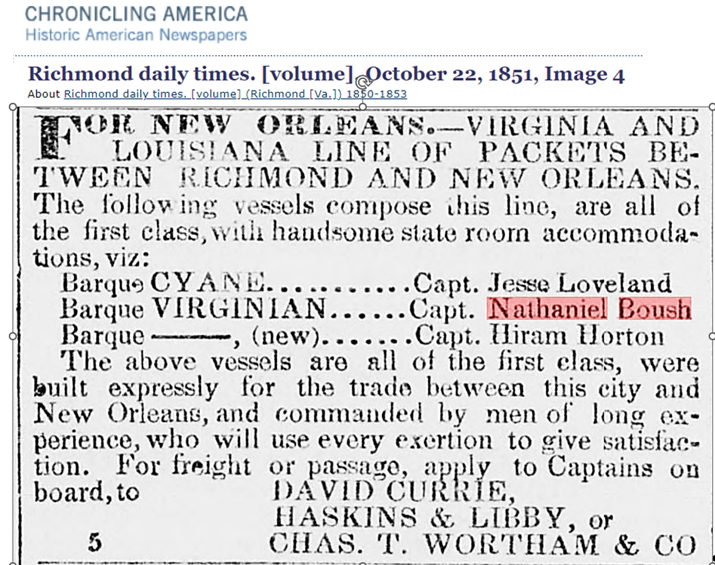
Research on Thomas Boudar revealed that he and Bacon Tait were partners. Bacon Tait owned perhaps as many as 2 slave jails in the Shockoe Bottom district of Richmond, VA near 15th and Cary Street from about 1834-1851. Other operators of slave jails were Silas Omohundro, George Apperson and Robert Lumpkin whose area on Wall Street, now 14th Street was referenced as ‘the devil’s half acre’. The jails housed 30-40 slaves who were waiting to be auctioned and also functioned as boarding houses for out-of-state traders and plantation owners. Lumpkins jails were also known as breeding houses. I have not found any information that indicates if Charlotte was held in one the slave jails while in Richmond or if she was held aboard the Virginian the 3 days before it sailed. I found in the Chronicling America news database an ad that ran in the Richmond Daily Times, that may explain the 3-day delay in Charlotte’s departure from Richmond. See the ad below.

Richmond Daily Times, October 22, 1851

For New Orleans. Virginia and Louisiana line of packets between Richmond and New Orleans.

The following vessels compose this line, are all of the first class, with handsome state room accommodations, viz:
Barque Cyane Capt. Jesse Loveland
Barque Virginian Capt. Nathaniel Bousch
Barque —, new Capt. Hiram Horton

The above vessels are all of the first class, were built expressly for the trade between this city and New Orleans, and commanded by men of long experience, who will use every exertion to give satisfaction. For freight or passage, apply to Captains on board, to
David Currie, Haskins & Libby, or Chas. T. Wortham & Co

Richmond Daily Times, October 22, 1851 obtained from Chronicling America

All 153 slaves reportedly made the voyage to New Orleans. Among them were 2 slaves of interest: Susan Kent and Davy Bush. Interest in Susan Kent because her last name suggests she may have been a relative of Charlotte’s and Davy Bush because I was able to locate him alive in Louisiana on the 1870 and 1880 census.
Charlotte and family most likely lived in what was then St. Mary Parish. Iberia Parish was not created until 1870 from land taken from St. Martin and St. Mary Parishes. Union soldiers had arrived by 1863 to this part of Louisiana. A number of plantation owners fled to Texas with their family and their slaves. The Patout, Weeks, Brashier and Wilson-Huff families were among those who fled and hired out slave in Texas towns of Marshall, Brenham, Huntsville, Navasota, and in Texas counties: Falls, Fort Bend, Harris, Freestone, Smith and Walker. Several Civil War skirmishes were fought in St. Mary Parish. Cannon balls landed in sugar cane and cotton fields where slaves were working. Numbers of slaves followed the Union soldiers all the way to Morgan City and New Orleans and were called contraband. Some freedmen enlisted and served in the US Colored Infantry. A number were killed in 1863 on the Teche Bridge in New Iberia by Confederate soldiers while Union troops looked on. A large measle epidemic broke out in 1864 and there was a devasting flood or overflow as it was called in 1867 that wiped out crops for large numbers of families. The Freedmen’s Bureau provided provisions of pork, corn meal and molasses to those who suffered devastating losses, both Black and White. Were Charlotte and family impacted by these events? I have not found their names among those who applied for assistance. I do not know with certainty whose plantation Charlotte and Young lived or where they lived prior to 1870. I have not found marriage or death records for their older children; Maria, Eliza, Ida and Lincoln so I can not say where they were born. Luvenia death certificate indicates that she was born in St. Landry Parish, but I have not been able to verify that.

The next record of Charlotte is the 1870 Iberia Parish census. She is listed with 36 year-old Joe Smith and children Maria 16, Eliza 12, Ida 10, Lincoln 5, Lavinia 2, Addison 1 and Ella 4 months. Charlotte’s age is recorded as 35 and her birthplace as Maryland. Neither she or Joe could read or write. Their older school-aged children could read but not write. Joe’s occupation is listed as farm laborer and he had $100 in personal property which could be livestock, wagons or farm equipment. Charlotte’s occupation was recorded as ‘keeping house’.

Charlotte is next recorded on the 1872 purchase of 7 ½ arpents of land in Iberia Parish with ‘Young’ Smith from Lassolin Bonin and wife Cecilia Broussard. Her name is recorded as Charlotte Patout. My niece Latrice and I have puzzled over why her last name was as written Patout and have theorized that Charlotte and/or Joseph aka ‘Young’ were slaves on the Simeon Patout and Appoline Fournier family plantations. The Patouts had plantations in St Mary (now Iberia), Iberville and Assumption Parish. The Henry Wagner family was listed in the household next to Charlotte and Henry was a known slave of Simeon Patout. The Patout family was in fact located 4 pages away from Charlotte and family in 1870. The land purchased by Charlotte and Young was located on the west side of Grand Marais in a place called Isle Piquant (which means prickly or sharp, now known as Patoutville) and was bordered by property owned by Stephen Jenkins, Appoline Patout, Lassolin Bonin and John Baptist Davis (Adelaide Bonin).

Charlotte’s oldest child Maria was born in 1854 which meshes with Charlotte arriving in Louisiana in 1851. 1 year old Addison was Charlotte’s grandson and not her son–his mother was Mariah Smith. The next info on Charlotte is the July 15, 1878 marriage record of Charlotte Prichart and Young Smith. Why was her last name recorded as Pritchard and not Phillips or Patout? The witnesses were listed as Amos Rolison, Barney Thompson and Sidney Rollison, the minister as Rev T. Gates. I looked for a long time for Amos and Sidney Rolison and Barney Thompson before I discovered a Sidney and Emos Robertson living in Patoutville on the 1880 census. Perhaps the parish clerk PH Segura wrote the last names as he heard them spoken and as he thought they were spelled and may that explains the last name recorded for Charlotte.

I could not find Charlotte, Joseph or any of their children on the 1880 census. I know that Lincoln Smith and Lizzie Porter Jacobs had 2 children Charlotte Smith Jacobs Paul Lovette in 1885 and David Lincoln Smith in 1892 through the info on death and probate records. By 1880 the family would have been living in their newly acquired home which by all descriptions was in the middle of the Patout family sugar cane fields. Maybe the census takers did not count the family because they did not walk far enough down the road.

Charlotte was last recorded on the 1900 Iberia Parish census with husband Joseph Smith, and daughters Amelia 19 and Cora 15 and married son Oliver Smith 21. Included in their household were Eliza’s son Matthew Smith Schaffer, Amelia’s son Clarence Smith and Cora’s daughter Agnes. Charlotte had a daughter named Charlotte who with husband Thornton Tibbs were listed a few households away on the same census page. Charlotte was 70 years old, had given birth to 15 children of which 9 were still living. Using information from death certificates, census records, and the 1969 sale of the family farm, I have only been able to account for 12 children. According to census information, she and Joseph had been married for 35 years. Per census data, Joseph owned his farm, mortgage free. Amelia, Cora, Oliver and Matthew were farm laborers working either on the family farm or some other farm.

Charlotte’s daughters, Luvenia and Sarah were living in New Orleans at the time of the 1900 Census. Charlotte’s daughter Ella was married and was living with her husband Thomas Johnson in Patoutville. Luvenia and Ella would both later move to Lake Charles, LA with their families and were listed living in Lake Charles for the 1910, 1920 1930 and 1940 census. Sarah Smith, husband William Davis Sr and son lived in St Mary and Iberia Parish from 1910 until Sarah’s death in 1939. Amelia and Oliver Jenkins had at least 9 children together and lived in Iberia Parish. I don’t know if they lived on the 7-acre homestead of Charlotte and Joseph.

I have not been able to find out who lived in the house between 1910 and 1930 as I have not been able to find Amelia and Oliver for census years 1910 and 1920. Charlotte died March 12, 1913 in Lake Charles, LA and was buried in Tab Nicole Cemetery (most likely Tabernacle Cemetery on Pear and Griffin Street off Prater Road). Her death certificate listed her parents as Joseph Phillips and Charity. The informant was her son-in-law, husband of Luvenia Smith, James A Perkins. Parent names are often omitted or left blank on death certificates for formerly enslaved people. The names of Charlotte’s parents were vital in connecting her to her Calvert County, MD family.

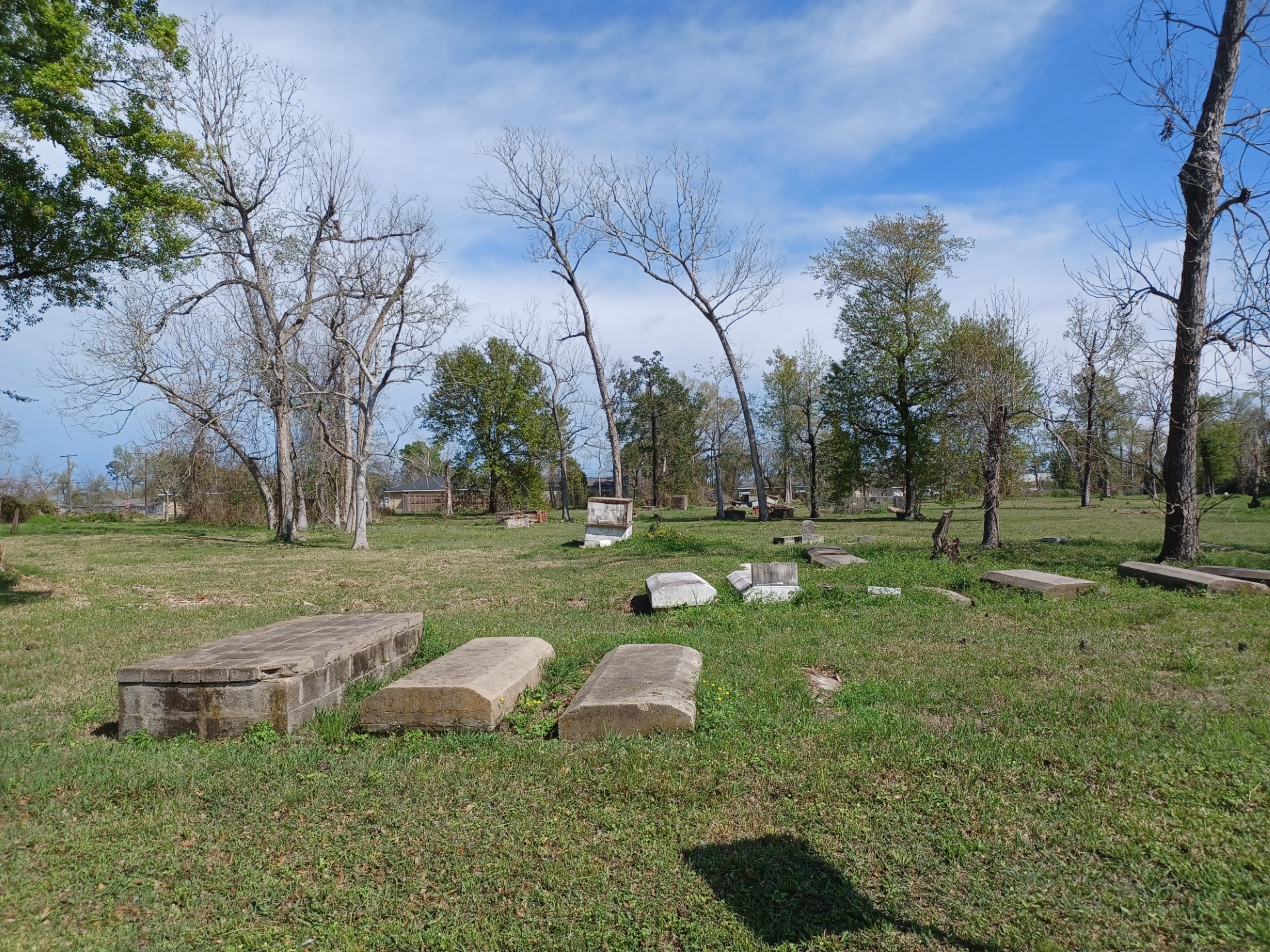
Zion Tabernacle Cemetery-Pear and Griffin Street, Lake Charles, LouisianaI wonder what stories Charlotte may have told her family about her life in Maryland. I imagine that she must have spoken about the family that she left behind, at least about her father and her daughter Charity, because those names were recorded on her death certificate. I would later figure out that Joseph Phillips was her father and Charity was her daughter. The informant had the information partially correct, but provided just enough to help us connect Charlotte to her long left-behind Calvert County, Maryland family.
Once I knew that Charlotte last name had been Phillips, I started looking closely at my mother’s DNA matches in Ancestry.com. Three profiles were key to making that connection—the profile of Cora G who was my mother half 2nd cousin, 1x removed or 3rd cousin. The others were Destinysmom12 and beulah. Destinysmom12 was also a half 2nd cousins 1x removed or 3rd cousin. Beulah was a 3rd cousin 1x removed. As an additional bonus, I discovered Cora’s DNA in Gedmatch.com. Cora and my mother matched each other 106cM on 8 DNA segments. Two of those segments were on chromosome 23 suggesting that the common ancestor was female. I looked at Cora’s partial tree in Ancestry and found Hester Watts on the 1910 census, with husband Virgin Watts and children whose last name was Jefferson. Looking back to 1900 I found a widowed Hester Jefferson. When I looked back to 1870, I found Hester counted twice-once as Hester Fawney with parents Eliza and Major Fawney and siblings. On that same page was 74-year-old Hester Phillips and in her household was 36 year old Joseph Phillips, 22 year old Charity Phillips, 1 year old George Phillips and 14 year-old Joseph Tawney. So, there was Charlotte’s family, all on one page in 1870.  

Young Hester was recorded a second time on the 1870 census was as Hester Tawney, age 4 with her parents Eliza and Major and siblings. In the household preceding theirs was Rhody and William Peter Kent. 2 households away was 18-year-old Robert Jefferson, whom she would later marry. I found a 36-year-old man named Peter Phillips living in close proximity to Joseph Phillips Jr and Eliza Torney. Peter was Charlotte’s older brother. His death certificate as well as that of Eliza and Joseph Phillips Jr all listed their father as Joseph Phillips.

I have not been able to find any information about Joseph Phillips Sr or about Hester Phillips born about 1796. The Calvert County courthouse records were destroyed in a number of fires including one in 1882. So, there are no marriage, probate, death or deed records to document Charlotte or her family.

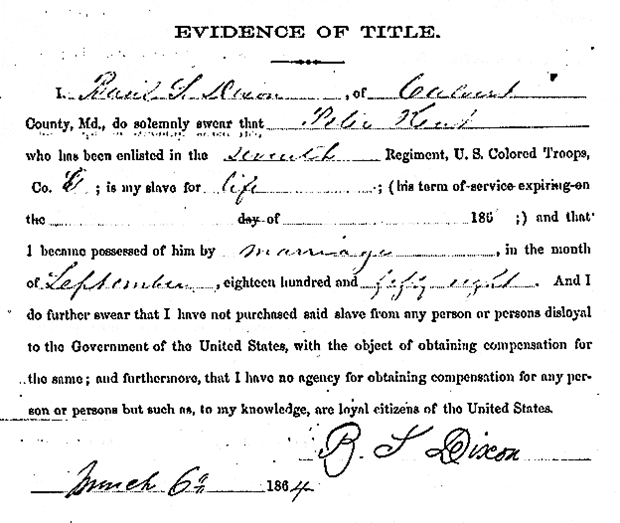
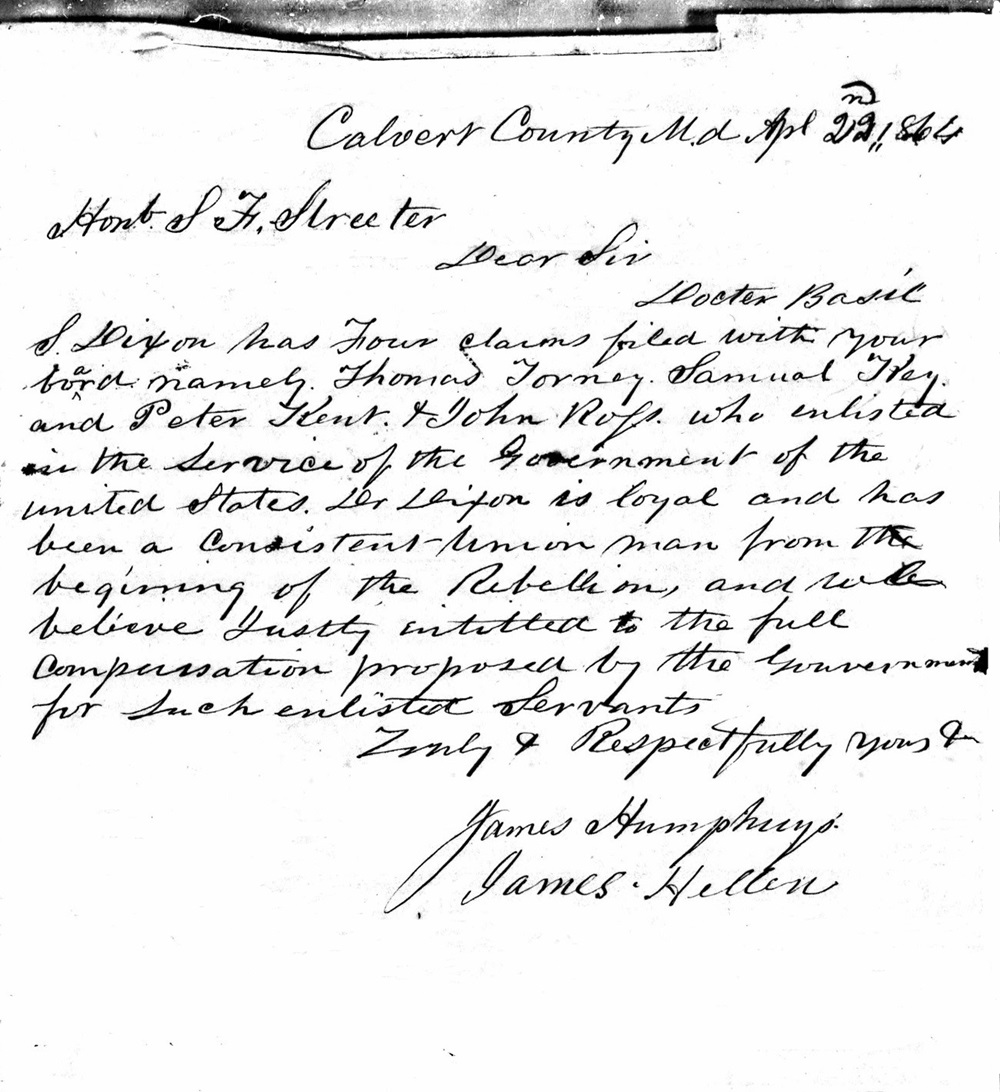
While I can’t say with 100% certainty, I believe that Charlotte and family were slaves on James Laveille Sr’s farm. James Laveille died 1857 and shortly afterwards his daughter Rebecca married Basil Sewell Dixon in Baltimore. Basil freed 4 slaves in 1863 so that they could serve in the Union army during the Civil War. He attested that he became possessed of Peter Kent, Thomas Torney, Samuel Key by marriage in September 1858. Thomas Torney died of typhoid fever in 1864 before leaving Maryland. His widow Anna Maria Green applied for his pension and described knowing Peter Kent at the time of her marriage to Thomas. She further testified that Peter Kent and Thomas Torney were cousins.

And while I don’t have any probate or deed records to prove that Charlotte’s family were enslaved by James Laveille Sr., the fact that Charlotte’s sister Eliza Phillips married Major Torney and that Basil Dixon is listed on the 1870 and 1880 US Census in very close proximity to Eliza and Major Torney as well as Joseph Phillips Jr. suggests that Dixon may have inherited Charlotte’s family by way of marriage to Rebecca Laveille after Charlotte was sold away. Basil Dixon owned 6 slaves in 1840, 14 in 1850 and 49 in 1860. None of his slaves were old enough to be Charlotte’s parents. By contrast, James Laveille owned 16 slaves in 1820, 19 slaves in 1840 and 30 in 1850. Some of these slaves were in the right age-range to have been Charlotte’s parents. The Laveille family had been in Maryland since the 1700s.
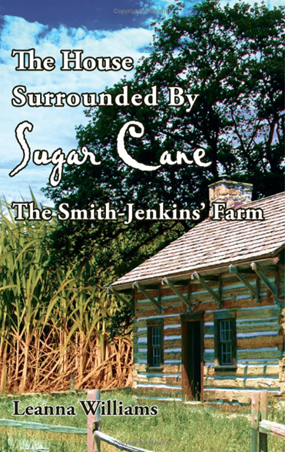
The House Surrounded by Sugar Cane, Leanna Williams
Charlotte’s great granddaughter Leanna Williams wrote, “The House Surrounded by Sugar Cane” in 2000 as a part of her church, New Canaan Missionary Baptist Church’s celebration of Texas/Louisiana Day celebration. The book was published in 2006. Leanna described the property so vividly that I could almost see it—a front yard filled with what she named ‘happy foods’; tomatoes, cucumbers, watermelon, cantaloupe and corn. Happy foods because they could be eaten with asking permission. She wrote that the property and was filled with the aroma from orange, plum and cedar trees. The house was unpainted and had a tin roof, wooden shutters and a fireplace that served the kitchen/living room and the bedroom. The house had back porch and Louisiana styled front porch with 2 entrances to the front of the home. From Leanna’s writing it clear that the trees were most likely planted before her father Livingston Jenkins moved into it in the mid 1930s. I like to think that Charlotte and Joseph aka Young or their children under the direction of Charlotte or Joseph, planted those trees with plans for feeding and nurturing themselves, their children and children’s children.

See a rendering of Charlotte and Joseph’s house as created by Latrice N. at

Video: The House Surrounded by Sugar Cane

https://www.youtube.com/watch?v=RZYGdVZejPQ

Best,

The Civil War Diary of William P. Woodlin

My most treasured genealogy finds have been stumbled upon while actively researching something altogether different. As was the case when I discovered 3 branches on my maternal family line while looking for the roots of my paternal family tree. I stumbled on a curious document on a Philadelphia.gov site that listed Louisiana slaves mortgaged by Chase Morgan Bank. This document helped untangle the Delahoussaye and Duchane branches of my paternal family tree. But once again those were not the branches I was researching when the doc showed up in Google search results.

I was very surprised when just before Hurricane Beryl knocked out my electricity, someone stumbled upon my research about my Woodlin kin that lived in New York. Marjory Allen Perez messaged me through Ancestry.com and told me of a book she’d written in 2018, “Freedom, A Shared Sacrifice: New York’s African American Civil War Soldiers” in which she’d referenced William P. Woodlin’s Civil War diary. I quickly responded with my email address and cell number. Beryl blew in about 5:30 a.m. Monday morning. I knew that I needed to limit use of cell phone to save the battery, but I kept looking for the answer to my message in Ancestry. I also fought the urge to search Google to see if I could find mentions of William’s diary.

My electricity was restored late Saturday night. I began my search on Sunday for William’s diary and found his diary referenced by quite a number of institutions: The National Musuem of United States Army, the Gilder Lerhman Institute of American History, Camp William Penn Museum, SUNY Buffalo State University, Purdue University and Battle of Olustee, etc. I found his diary on the Gilder Lerhman Institute of American History web site. The institute also had a panel discussion in 2021 in which William’s diary was discussed.


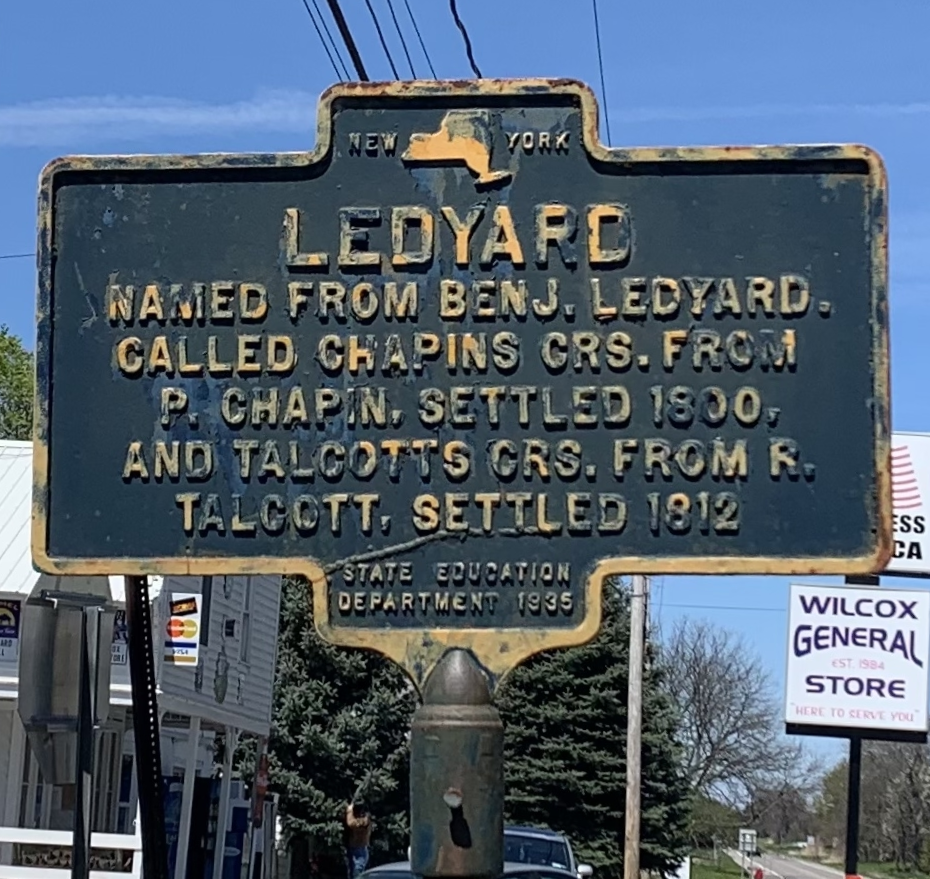
William diary reveals what he saw, heard and did and was not introspective. Through his written words we know what he and others actually did. William lived in Ledyard, Cayuga County, New York before enlisting and serving in the 8th Regimental band. He wrote about the Battle of Petersburg and the Battle of Olustee in Florida. He wrote about: the disparity in pay for Negro enlistees; how much he had to pay for his clothing supplied by the Army; the weather; attending church; military drills; and songs played by the band (Yankee Doodle, Old Lang Syne, Home Sweet Home, Hail to the Chief, quick step, etc.). He wrote about: rations being issued; food that he cooked; the capture of prisoners; contraband joining their encampment and the 54th & 55th Massachusetts Volunteer Regiment. His diary included instances of when the band escorted various regiments to the wharf:

We went to Hilton Head to escort the 39th Illinois to the Steamer and played Old Lang Syne

We escorted the 85th Ohio, 48th New York to the wharf; two of them being discharged and the third having reenlisted

William wrote about the various places he was stationed: Petersburg, Baldwinville; Charleston, SC; Olustee, Jacksonville and Tallahassee, FLA. William wrote about receiving the news that the band would be shipping out:

The news came that we were to move to Carolina soon. We were all on inspection nearly all day; the Col. said that we were to give up our guns, who belonged to the band. We did not play at all as the members were nearly all gone. Shank among the rest. Whiskey held high sway here all day.”

William’s diary has been and is still being studied for the events and places that were covered in his writings. I had hoped to learn more about William and his family and their life in New York and perhaps learn about their mother Anna and family left behind in Louisiana. William’s diary entries seemingly do not include personal references. So far, I’ve read where he mentioned writing letters to his wife Julia and where he mentioned that his brother visited him. He had 2 brothers and does not name which brother came for the visit. I will continue to read William’s diary but now looking at his words through a different eye, an eye to what William is saying about history and his part in it.

Best,

P.S.
Read my earlier blog entry about William P. Woodlin

Loving the New Ancestry.com Shared Match, Pro Tool

I often bounce around, alternatively using between Ancestry.com, Gedmatch, FamilySearch.org and 23AndMe.com as I go down various rabbit holes in search of my familial roots. I’d been focusing on 23AndMe for a month or so. Two weeks ago, I logged into Ancestry to see if the new profiles I’d seen in 23AndMe also existed in Ancestry. I saw a several new profiles and clicked on the Shared Match button. And was I surprised! The Shared Match button previously showed how closely you matched a particular person and the profiles of other people that you and the shared profile both matched. Also displayed was the amount of shared DNA and the kinship relationship for you and the various profiles. But you could not see how closely each of the shared match profiles matched each other.

That was how the Ancestry, Shared Match tool used to work!

Ancestry has updated the tool so that it is similar to the 23AndMe tool which allows you to see the match between you and match A and match A and match C, D, etc . This is a total game changer. Right off the bat I was able to figure out how 2 close DNA matches were connected to my family and to each other. Before the tool was updated, I could only speculate on the connection, but as they say, “DNA does not lie.”

I next began using the shared match tool to focus on the connection between my known Calvert County, MD family to a large number of DNA matches in Drew County, Arkansas and Monroe County, Alabama. These connections are still too complex to figure out and still seem to point to cross matches between my mother’s parent#1 and parent#2.

The tool has also helped me focus on several DNA profiles that include branches that include the surnames of Banks, Donelson and Lambert. These branches lived in Washington, DC and Virginia. Hopefully, I can use the tool to connect these closely related people to my Gibson, Hill and Morgan family members who came to Louisiana from Virginia.

I think I am close to nailing down the ancestral roots of another branch on my family tree. I just need to stay focused and work one branch at a time!

Best,

Still Searching…

I began researching my family genealogy in minor ways in 2000 and did not take the deep dive until 2015 when I sent off my mother’s DNA to Ancestry. Through these blog posts I’ve been detailing the journey of my successes and setbacks. My greatest research challenge is that both my maternal and paternal family were enslaved in the same parishes in Louisiana. My maternal lineage has roots in Maryland, Virginia and the Carolinas. Through DNA I have found significant information. I have not been able to break through any walls in researching my paternal lineage. Some of my greatest finds on my maternal branches have been uncovered quite accidentally while instead researching my paternal family tree. I have not been able to unearth any information on my paternal ancestors that connects or points to anywhere before their lives in Louisiana. I will continue to search.

Best,

Stumbling All the Way Into Figuring Out My Family’s Story!

I have been conducting genealogy research since 2000. I began my research at Clayton House in Houston by pouring over census records on microfilm and in written journals for hours, days and weeks. I expanded my research to include probate and deed records and then death and marriage records. And again, I sat looking at reel after reel of indexes, probates, inventories and court minutes for long hours. Sometime later I obtained an Ancestry.com membership as more digital information became available. I’ve mined many of digital records provided by Ancestry.com, FamilySearch.org, Fold3 and Find-A-Grave.com. I’ve visited research centers in untold counties in Texas and parishes in Louisiana with detailed to-do lists in hand. I found probate records that detailed the sale and emancipation of slaves in my husband’s family tree.

But the most astounding things that I have found while researching my own family tree in Louisiana and Maryland have been from sources that I truly just stumbled on! Last week while searching for Cote Blanche, I stumbled on a pdf that contains the names of enslaved persons owned and mortgaged by a large number of banks in Louisiana including JP Morgan Chase Bank, Citizens Bank of Louisiana and The Second of Bank Kentucky. Included in the document are the names of slaves as well as previous and current slave owners. Conveyance and land records held by The New Orleans Public Library and minute records from Citizens Bank are sources for the transactions included in the pdf.

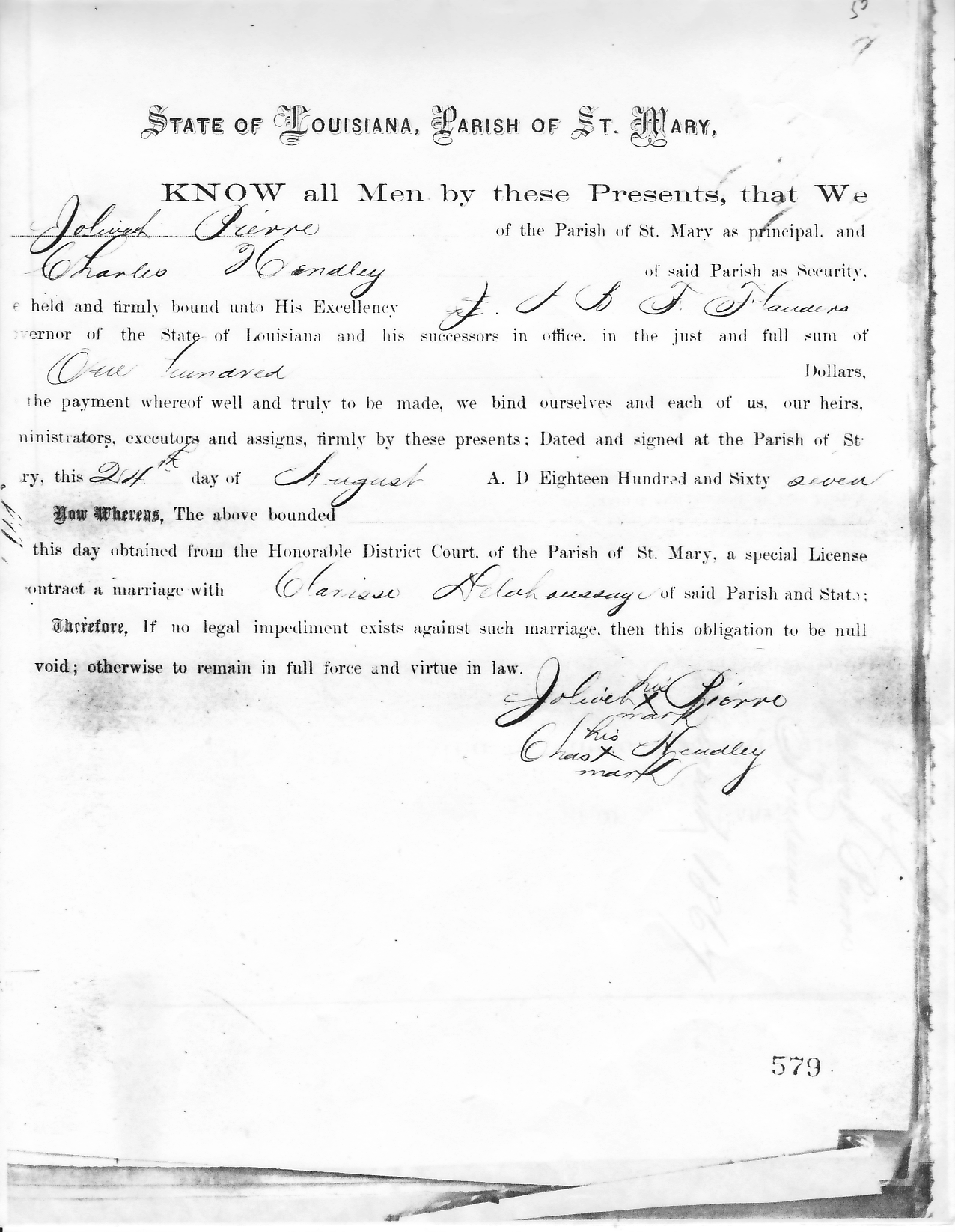
Included in the listing are the names of my 4th great grandmother Julia Stanton and her children Jolivet Duchane alias Jolivet Pierre and Lelia Delahoussaye. I had discovered my connection to Jolivet and Lelia in 2001 while researching the marriage records at the St Mary Parish Courthouse. I was specifically looking for information on Clarisse Duchane and discovered that 3 women: Clarisse, Esther and Lelia all with the last name of Delahoussaye, were married on the same date, August 24, 1867. Julian Barabin and Charles Hansley were listed as witnesses for 2 of the 3 marriages. The names of the bride and groom were muddled in one instance. Hester or Clarisse Delahoussaye was listed as the bride of Charles Hansley.

I knew that Clarisse was on my family tree, but I had no idea who Lelia and Hester were. I wanted to find out if they were Clarisse’s sisters. I looked up the 3 Delahoussaye women on the 1870 Iberia Parish Census and found Pierre Jolivette and Clarisse with their daughter Rachel, my 2nd great grandmother. Clarisse was reported to have been born in Maryland in 1829. Listed on the same page was St Cyr Delahoussaye. I then found Lelia who was reported to have been born in Louisiana in 1832 and husband Julian Barabin. Listed in Lelia’s household was Julie Stanton who was born 1804 in Maryland. Esther and Charles Hansley were also living in Iberia Parish. Esther’s birthplace was listed as Maryland.

So, I surmised that Clarisse and Esther could be sisters as the birthplace of both was listed as Maryland. I noted that Julia Stanley was also born in Maryland and was old enough to the mother of Clarisse and Esther. But I was confused because she was living in the household of Lelia Delahoussaye Barabin and not one of the other 2 Delahoussaye women.

I next looked at the 1880 Iberia Parish Census and found ninety-year-old Julia Stanton in the household of Jolivette Pierre and Clarisse. She was listed as the mother of Jolivette. I assumed that the census taker had mistakenly listed her as Jolivette’s mother when she was in fact his mother-in-law. The birthplace of Jolivette’s mother was reported as Maryland. Maryland was still listed as Clarisse’s birthplace as was the birthplace of both of her parents. I next looked up Esther Hansley and saw that Maryland was recorded as her birthplace as well as both of her parents. Esther was born in 1835 which means she was born after both Clarisse in Maryland and Lelia in Louisiana. This led me to think that Lelia could not be their sister of the other 2 women who I still thought could be sisters.

I next looked up death records for Clarisse, Esther and Lelia as well as Jolivette. Clarisse’s death certificated listed her mother’s name as Rachel and not Julia. Esther’s death certificate listed only her father’s name–Isaac Scott. But her birthplace was listed as Alabama and not Maryland. I have not been able to find a death certificate for Lelia or Jolivette. Interestingly though, the last name of Clarisse and Jolivette was listed as Duchane on the 1900 census.

So, I’d found the Clarisse’s husband was Jolivette Pierre and not Pierre Jolivet. And that Jolivette Pierre had changed his last name to Duchane sometime between 1880 and 1900. I’d found that he’d served in the Civil War under the alias of Jolivette Pierre.


Despite all of my research, I had been unable to determine if Julia Stanton and Julie Stanley were the same person and which of the women and men were here children. That is until last week, when I stumbled upon the JP Morgan Chase Bank document while looking for information on the Cote Blanch Plantation! Listed on page 62 was a listing of slaves conveyed Oct. 10, 1840 in St Martin Parish to Octave Delahoussaye. Among the slaves were: Dick, Alfred, Thomas, Jim, Isaac, Julie, Edouard, Jolivet, Patsy, Ophelia, Lelia, Maria, Maria, Dickson, Patsy, Sophie, Francisque. I found A Delahoussaye and family; Wm Shephard and Patsy; Dixon Smith and Ophelia all on the same page, page 150B of the 1870 Iberia Parish Census. Julien, Lelia and Julia were listed on page 151A along with St Cyr Delahoussaye.

So, I had my answer! Julia Stanton and/or Julie Stanley was the mother of Lelia Delahoussaye and Jolivet Pierre. Julia was born in either 1790 or 1804 in Maryland and brought to Louisiana where she became the mother of Jolivet and Lelia.

I was researching the Cote Blanch Plantation and the slaves of John Huger and later Thomas Huff and later still William Fellows and somehow stumbled on my Duchane family!! I won’t question the how or why I stumbled on this great resource. I will simply say thank you to the persons who put in the time to find, transcribe and share this awesome document!! I plan to comb through this new information to see what I can see. I know there are other buried treasures out there. I hope to stumble upon every one of them some day!!!

Check out this new gem at https://www.phila.gov/media/20230829122821/Chase-Bank-Slavery-Era-Disclosure.pdf

Best,

When the Person You Find Isn’t the Person For Whom You Were Looking

Ella Louise Smith Johnson was born March 1, 1870, in Patoutville, Iberia Parish, Louisiana. She was the sixth child of Charlotte Phillips and Joseph ‘Young’ Smith, my 4th great-grandparents. She was my 3rd great grandaunt. Ella and husband Thomas Johnson were listed on the 1900 Iberia Parish federal census with sons: Foote 12, Edward 10, Albert 9 and Joseph 8. Everyone in the household could all read and write. Thomas was employed as a day laborer. By 1910, Ella was recorded on the U.S. Census living in Calcasieu Parish, Louisiana with three sons: Lincoln 22, Edward 20 and Albert 18. Most likely, Lincoln was the son named Foote on the 1900 census. Census details depicted Ella as a thirty-nine-year-old married woman who had given birth to 4 children who all were still living. Her husband Thomas and youngest son Joseph were not listed in the household–I have not found either man on any 1910 census roll. Ella and son Edward were still living together in Calcasieu Parish at the time of the 1920 census. Ella was then listed as a widow. Included in her household was a twenty-seven-year-old married male whose first name was recorded as ‘Johnson’, his wife Blanch 22 and 4-year-old daughter Ella. The twenty-seven-year-old male was most likely Joseph Johnson. I later found Joseph’s WWI draft registration form which indicated that he lived in Calcasieu Parish and was a married man with 1 child. I was initially unable to definitively find Lincoln or Albert Johnson in 1920. Ella and Edward continued to live with one another and were recorded together on the 1930 and 1940 U.S. Census in Calcasieu Parish. Edward served in WWI in the 522nd Engrs Battalion, Company B. He sailed from Hoboken, New Jersey to Brest, France on August 30, 1918, on the Susquehanna. His mother was listed Ella Johnson, living in Lake Charles, Louisiana. He left France June 3, 1919, and arrived in Newport News, VA on June 11, 1919. Information on Ella’s 1949 death certificate provided her parents’ names as Joseph Smith, born in Frankfort, KY and Charlotte Smith. She was buried in East Side Cemetery. The informant was A. L. Johnson. Joseph Johnson was a little hard to trace because there were a number of men born about the same time with the same name. I was ultimately able to positively identify Joseph through his World War II draft registration form which listed his nearest relative as Blanche Johnson and his place of residence as Port Arthur, Texas. Once I knew that Joseph lived in Port Arthur, I was able to find he and Blanche listed in multiple Port Arthur city directories. I then found Joseph’s 1963 death certificate. His parents were reported as Thomas Johnson and Ella Louise Smith. The informant once again was A. L. Johnson. I theorized that A. L. Johnson was Foote and also referenced as Lincoln Johnson. I theorized that his name was probably Abraham Lincoln Johnson. I searched U.S. Census rolls for Abram or Abraham or Lincoln Johnson. I changed Foote’s name to Abraham Lincoln on my Ancestry tree and just like that, a leaf appeared. Abraham Lincoln Johnson appeared on family trees for several Ancestry.com users. Many of those trees had a Find-A-Grave link to an Abraham Lincoln Johnson who had died in 1964 in Galveston, Texas. Included on the Find-A-Grave listing was the name of Abraham’s wife Serena Washington and 2 children: Lloyd Johnson and Fabeola Johnson as well as a copy of his death certificate. His parents were recorded as Tom Johnson and Ella Smith and his birthplace as Jeanerette, Louisiana. A.L. Johnson was reported to have been a forty-two-year Galveston resident. The informant was Della Johnson. A.L. Johnson was buried in Mainland Cemetery. So, I now had information on A.L. aka ‘Foote’ or Lincoln Johnson and the names of 2 children. I researched backwards to find Lloyd and Fabeola Johnson with a mother named Serena living in Galveston, Texas. I found both children with a mother named Serena and a father named Abraham on the 1920 and 1930 U.S. Census. The family lived in Beaumont, and not Galveston. In any case, I added Fabeola, Lloyd and siblings to my Smith family tree. There were stories about their marriages, deaths, etc. in Newspapers.com. I continued to run across many more family trees that included descendants of Abraham Johnson and Serena Washington. Every time I found a new tree I’d check to see in the profiled person was a DNA match to my mother and every time I was disappointed. This went on for 2 or 3 years–finding trees with Abraham Johnson and Serena descendants but none were DNA matches to my family. In the intervening years I’d obtained death certificates for Ella’s sister Louvenia Smith Perkins and their mother Charlotte Phillips Smith as well as a 1972 death record for Ella’s son Edward Johnson. Charlotte died March 12, 1913, in Lake Charles and was buried in Tab Nicole Cemetery. My niece later correctly identified the cemetery as Tabernacle (now known as Zion Tabernacle Cemetery). The informant on Charlotte death certificate was J. A. Perkins (her son-in-law and husband of Louvena). Louvena (Lavina) was born about 1868 and had also lived in Calcasieu Parish, Louisiana from 1910 until her death in 1947. Louvena was buried in Pryce Cemetery. The informant was her daughter Effie Perkins. Quite recently I found the obit of James A Perkins. His daughter Effie Perkins Lewis was mentioned, as was Louvena’s daughter Priscilla Marshall Williams of Chicago. James was a member of Old Emmanual Baptist Church and was buried in the adjoining cemetery. My niece Latrice and I researched the locations of and the current names of the above-mentioned cemeteries in Lake Charles. I decided to drive to Lake Charles to visit the cemeteries and perhaps find headstones with the names of family members. I’d telephone the Old Emmanuel Baptist Church in hopes obtaining information related to Louvena and/or James Perkins. The phone number listed on the internet for the church was a non-working number, so I decided to just drive to Lake Charles to see what I could see. Well, I started for Lake Charles from Houston on what seemed a little overcast, but okay day. By the time I reached Beaumont, I’d begun to think about turning around. But you know that I didn’t. I continued driving. I was near Orange, TX and finally decided to pull off the road and wait for the thunderstorm to pass. An hour and half later, I was back on the road. I was close behind the storm, but I was, behind it. When I arrived in Lake Charles the ground was a little damp, but the sky was a beautiful blue. I drove to Old Emmanuel Baptist Church on 1200 N. Prater Street at See St. The church was a total wreck–it had been damaged by Tropical Storm Claudette in 2021. That explained why the phone number was no longer working. There was no one around to ask questions, so I walked the adjoining cemetery grounds. There were a number of headstones with the last name of Johnson, but not Edward Johnson. I found James A Perkins on the 3rd or 4th row nearest to the church. I did not any other names of interest. I next drove to Zion Tabernacle Cemetery located at 1304 Pear Street. The cemetery is a very short walk from Old Emmanual Baptist Church and is located off N. Prater and Griffin St. Because of how close the 2 locations are, I think that 2 cemeteries and church may have at one time served a united congregation. Charlotte Phillips Smith was most likely buried here. The cemetery covers almost a full city block. The grass had been freshly cut and the graveyard was free of debris and weeds. But the brick vaults are in bad shape and few headstone markings are legible. I feel Charlotte is here!! I just don’t know where. I wanted to go to Eastside Cemetery, which I think is the new name for Pryce Cemetery. Both Louvena Smith Marshall Perkins and Ella Smith Johnson are buried there. I’d researched the cemeteries online and have not seen headstones for either woman. I had almost 2 hours less research time left because of the earlier storm delay. So, I opted to go the courthouse to look up deed, marriage and probate records. In less than 15 minutes I found a 1924 deed recording the sale of land to Ella Johnson, born Smith, widow of Tom Johnson, by Mr. John L. Wasey. Lots 13 and 14in Sec 34 of the Joseph Lawrence Ryan Subdivision were conveyed to Ella for $1250 on October 13, 1924. I found a marriage record for Abraham Lincoln Johnson and Cerena Washington. Per the marriage certificate, Abraham was born in Jennings, Louisiana and his father was Vaurillya Johnson. This did not fit! My Abraham Lincoln Johnson’s father’s name was known to be Thomas Johnson. My Abraham Johnson was born in Jeanerette–I had a death certificate that correctly stated so. I drove back home and took another look at the Abraham and Cerena Washington family that was recorded on the U.S. Census in Beaumont for 1920 and 1930. After 1930 Cerena is no longer listed in a household with Abraham. Perhaps there were 2 men who lived in Calcasieu Parish named Abraham Lincoln Johnson–one who married Cerena and had children named Floyd and Fabeola in Beaumont and another who lived in Galveston for forty-two years and knew someone named Della. Who was Della? Finding out who Della was provided the answer to my question. I found a 1953 Galveston City Directory listing for a Della C and Abram L Johnson who lived at 1217 Avenue M. I searched earlier Galveston City directories and found a 1924 listing for Abraham L Johnson, (c colored) and Claudine living at 1512 34th Street as well as a listing in 1928 of Claudine and Abr L (transcribed by Ancestry as Afar L) Johnson. I next searched the 1920U.S. Census for Claudine Johnson and found a record for a nineteen-year-old Claudine Johnson and thirty-year-old Abron (sp) Johnson who worked at a cotton press. I later found a marriage record for Claudine Vincent and Abram L. Johnson dated May 14, 1919. I next found that someone named Abram Lincoln Johnson had married Mrs. Lucy Nichols on November 21, 1928. I found Abram and Lucy on the 1930 U.S. Census living in Galveston as well as twenty-nine-year-old Claudine Vincent. Claudine’s marital status was divorced. I have not yet found Abram on the 1940 census. I did find Abram L Johnson and Della on the 1950 U.S. Census living at 1217 Avenue M. Abram worked as a cotton stenciller at a cotton compress and Della as a ‘Telephone Girl’ for a plumber. I have not found a marriage record Abraham and Della, but I have learned that she had been previously married to L.D. Canada, hence the middle initial of C included on the 1953 Galveston city directory. Her maiden-name was Sledge. So, I went back to see what became of Cerena’s husband Abraham Johnson. I found his April 15, 1952, death certificate. Per the death certificate, he was married, lived at 546 Niecy Street in Beaumont and was buried in Blanchett Cemetery. The informant was Ivan V Garlow, a descendant of Serena Washington Johnson.  So, I’d found an Abraham Lincoln Johnson. A man whose family tree is easily traceable and has many branches. There are newspaper stories and several photographs of this Abraham Lincoln Johnson’s descendants. Unfortunately, this is not my Abraham or Abram Lincoln Johnson. I have not found that my Abraham ever had any children. His brother Edward died in Lake Charles in 1972. I found his probate at the courthouse. Edward was apparently married once, but his wife died while young and they had no children. Joseph Johnson and wife Blanche appeared on the 1920 U.S. Census with their daughter Ella. I have found a Blanche listed with a Joseph Johnson in Port Arthur, Texas city directories for 1931, 1933, 1933 and 1947. But I have not found a Blanche Johnson living in Port Arthur, TX without Joseph Johnson for any census after 1920. Similarly, I cannot find Joseph’s daughter Ella. When searching for a marriage record for Joseph Johnson and Blanche I keep getting leaves that pop up on my Ancestry.com family tree regarding a 1923 marriage in Manhattan, New York for Joseph Johnson and Blanch Curtis. I am quite sure this Joseph Johnson is not my Joseph! My last hope of finding a descendant of Ella Louise Smith and Thomas Johnson is with their son Albert Johnson who was born about May 1891 and last listed with the family on the 1900 Iberia Parish Census. I have temporarily included an Albert Johnson on who married Eva Woods and lived in Lake Charles Arthur at the time of the 1920 and 1930 census. He was listed in the 1917 Lake Charles city directory and on the 1940 U.S. Census living in Arizona. I have not yet found a death certificate for Albert to indicate the names of his parents. So, I’ll keep looking to see if this Albert Johnson causes any leaves to pop up on my family tree that lead to profiles with DNA matches to my mother! Or perhaps Joseph Johnson and Blanch Curtis in Manhattan are actually my Joseph and Blanch! Who knows? Best,

Walking in Their Footsteps

Ask anyone who knows me, and they will say that I am a genealogy enthusiast at best or that I am a genealogy nut at worst.  My son once said that I could find a way to swerve any conversation into the genealogy lane.  A significant part of my obsession with genealogy research includes the who begat who stuff.   I want to trace my lineage as far back as possible. I want to know, if possible, where we got or chose the surnames on the family tree: Guy, Jenkins, Smith, Gibson, Riggs, Morgan, Hill, Alexander.  I want to know how my Maryland, Virginia and Carolina ancestors came to be in Louisiana.   I understand how the lure of wealth in the industries of sugar cane, cotton, rice, etc. led to the movement of slaves to the south and west.   I’ve read many slave narratives that detailed how people were trafficked by way of steamships equipped with sails through New Orleans from Richmond, VA, Charleston, SC, or Savannah, GA or shipped down rivers on flatboats and paddleboats or conveyed overland in coffles traveling through Alexandria, Winchester and Abingdon, VA, through Atlanta, GA, Montgomery, and Mobile, Ala to Louisiana. After reading these stories, I wanted to know my ancestors’ stories–who brought them, how they travelled, who they left behind, or if there is DNA evidence to link me to those left behind.   I want to know how they lived, what they did for work and pleasure and anything that might help inform me on how we, I, came to be the people, person that now live.   In essence, I wanted to walk in their footsteps.

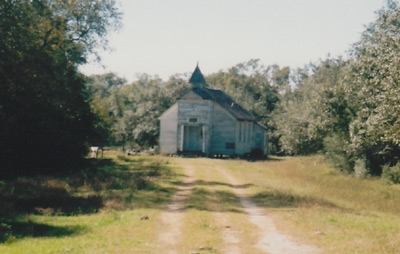
St Mary Baptist Church, El Maton, Texas

During my initial years of genealogy research, I sometimes felt that I was being led or otherwise drawn to pursue certain research paths or to focus on certain people.  My initial research focused on my husband’s family because they had been slaves in Texas counties within driving distance to where we lived.  The lives and stories of three women on his family, Iris Temple and her daughter Easter Temple Rivers Hadden as well as Iris’ great granddaughter Cassie Martinez continually beckoned me to keep digging out their stories.  I drove to El Maton and Wilson’s Creek in Matagorda County.  I’d read that Wilson’s Creek had been used to move goods to and from Palacious Bay.  When I saw it 2001, it was a mere gully.  Along its banks was the Moore/Deadrick Family Cemetery.  The St. Mary Baptist Church that the family once attended had been relocated to a nearby lot.  I walked the land where Iris once lived and along Wilson’s Creek where Easter was recounted to love to fish in the evenings.  Cassie was born there and attended school there through the age of sixteen.  The surrounding area was quiet and peaceful, filled with the sounds of birds chirping and squawking and of cows mooing.  The Temple, Moore and Rivers men had been mostly cattlemen and not primarily farmers.  The family has a photo of a young Cassie sitting on a coral fence.  I could feel a connection to the place and to the people who once lived and walked that land.

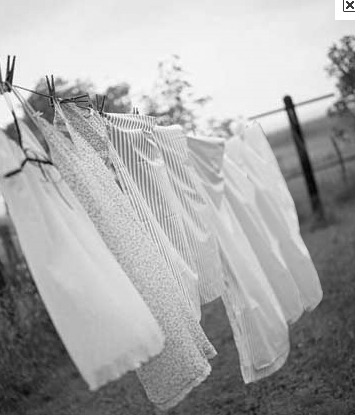
As I research my Louisiana ancestors, I’ve been attempting to walk where they’ve walked.  The homes that both my grandparents built still stand.  I have memories of using washboards and wringer washing machines and of hanging out the wash on clotheslines.  I can almost see my grandmother Josephine standing at the kitchen door looking out and smiling her little crooked smile.  I can smell the honeysuckle that grew in the lot between their home and the Pentecostal church on the corner.  When I close my eyes, I can see yellow day lilies and liriope grass with its purple flower stalks that lined my paternal grandparent’s front walkway or the crepe myrtle and Rose of Sharon trees beside the carport.  I can see the laugh-lines that creased my maternal grandfather’s face and hear faintly my grandmother Sarah saying, ‘Oh, Preston!’  When I think of those houses, smells and sounds come to mind.  I can almost smell Pine-o-Pine and cedar, Sub Rosa deodorant, Tide washing powder, frying fish or chicken and Stein syrup.  The smell of chopped onions, bell peppers and garlic come to mind as do the smells of fig, pear, corn and watermelon rind preserves being cooked.  I can almost hear the radio announcer call baseball games with my grandfather talking in the background about how he played as a young man.  Sometimes I can hear my grandfather Preston calling out Elijah’s name in his sleep.  I can almost hear the whine of my grandmother Sarah’s sewing machine and see her holding the fabric close to her face because of her poor eyesight.

I have memories of my grandparents, but realize I know almost nothing about them.  I realized that I don’t know who planted the flowers or trees or under whose direction they were planted or cared for.  Both grandfathers built their own homes—how did they know how to do that, who taught them?  Sarah was an excellent seamstress and Josephine a phenomenal cook—who taught them?  I have walked where my grandparents walked and still have quite clear memories of them.  I am still walking in their footsteps and holding on to words and beliefs that they spoke.  My grandparents often said the words, “God willing…”

So, I will continue my journey to see what I can find about in whose footsteps my grandparents walked and plan to take a walk myself either intellectually or physically in those footsteps.  I know that something I discover will entice or beckon me to keep digging out their stories.

Best,

Design a site like this with WordPress.com
Get started