Ask anyone who knows me, and they will say that I am a genealogy enthusiast at best or that I am a genealogy nut at worst. My son once said that I could find a way to swerve any conversation into the genealogy lane. A significant part of my obsession with genealogy research includes the who begat who stuff. I want to trace my lineage as far back as possible. I want to know, if possible, where we got or chose the surnames on the family tree: Guy, Jenkins, Smith, Gibson, Riggs, Morgan, Hill, Alexander. I want to know how my Maryland, Virginia and Carolina ancestors came to be in Louisiana. I understand how the lure of wealth in the industries of sugar cane, cotton, rice, etc. led to the movement of slaves to the south and west. I’ve read many slave narratives that detailed how people were trafficked by way of steamships equipped with sails through New Orleans from Richmond, VA, Charleston, SC, or Savannah, GA or shipped down rivers on flatboats and paddleboats or conveyed overland in coffles traveling through Alexandria, Winchester and Abingdon, VA, through Atlanta, GA, Montgomery, and Mobile, Ala to Louisiana. After reading these stories, I wanted to know my ancestors’ stories–who brought them, how they travelled, who they left behind, or if there is DNA evidence to link me to those left behind. I want to know how they lived, what they did for work and pleasure and anything that might help inform me on how we, I, came to be the people, person that now live. In essence, I wanted to walk in their footsteps.
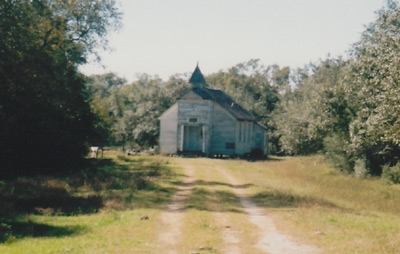
During my initial years of genealogy research, I sometimes felt that I was being led or otherwise drawn to pursue certain research paths or to focus on certain people. My initial research focused on my husband’s family because they had been slaves in Texas counties within driving distance to where we lived. The lives and stories of three women on his family, Iris Temple and her daughter Easter Temple Rivers Hadden as well as Iris’ great granddaughter Cassie Martinez continually beckoned me to keep digging out their stories. I drove to El Maton and Wilson’s Creek in Matagorda County. I’d read that Wilson’s Creek had been used to move goods to and from Palacious Bay. When I saw it 2001, it was a mere gully. Along its banks was the Moore/Deadrick Family Cemetery. The St. Mary Baptist Church that the family once attended had been relocated to a nearby lot. I walked the land where Iris once lived and along Wilson’s Creek where Easter was recounted to love to fish in the evenings. Cassie was born there and attended school there through the age of sixteen. The surrounding area was quiet and peaceful, filled with the sounds of birds chirping and squawking and of cows mooing. The Temple, Moore and Rivers men had been mostly cattlemen and not primarily farmers. The family has a photo of a young Cassie sitting on a coral fence. I could feel a connection to the place and to the people who once lived and walked that land.
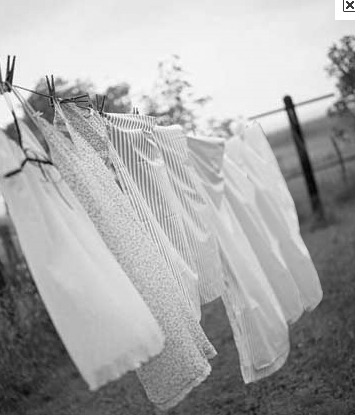
As I research my Louisiana ancestors, I’ve been attempting to walk where they’ve walked. The homes that both my grandparents built still stand. I have memories of using washboards and wringer washing machines and of hanging out the wash on clotheslines. I can almost see my grandmother Josephine standing at the kitchen door looking out and smiling her little crooked smile. I can smell the honeysuckle that grew in the lot between their home and the Pentecostal church on the corner. When I close my eyes, I can see yellow day lilies and liriope grass with its purple flower stalks that lined my paternal grandparent’s front walkway or the crepe myrtle and Rose of Sharon trees beside the carport. I can see the laugh-lines that creased my maternal grandfather’s face and hear faintly my grandmother Sarah saying, ‘Oh, Preston!’ When I think of those houses, smells and sounds come to mind. I can almost smell Pine-o-Pine and cedar, Sub Rosa deodorant, Tide washing powder, frying fish or chicken and Stein syrup. The smell of chopped onions, bell peppers and garlic come to mind as do the smells of fig, pear, corn and watermelon rind preserves being cooked. I can almost hear the radio announcer call baseball games with my grandfather talking in the background about how he played as a young man. Sometimes I can hear my grandfather Preston calling out Elijah’s name in his sleep. I can almost hear the whine of my grandmother Sarah’s sewing machine and see her holding the fabric close to her face because of her poor eyesight.
I have memories of my grandparents, but realize I know almost nothing about them. I realized that I don’t know who planted the flowers or trees or under whose direction they were planted or cared for. Both grandfathers built their own homes—how did they know how to do that, who taught them? Sarah was an excellent seamstress and Josephine a phenomenal cook—who taught them? I have walked where my grandparents walked and still have quite clear memories of them. I am still walking in their footsteps and holding on to words and beliefs that they spoke. My grandparents often said the words, “God willing…”
So, I will continue my journey to see what I can find about in whose footsteps my grandparents walked and plan to take a walk myself either intellectually or physically in those footsteps. I know that something I discover will entice or beckon me to keep digging out their stories.
Best,
 My Maryland-Louisiana Roots